01
What You're Actually Buying: Construction, Features & Cost Economics
What used collapsible bulk containers are, what they do well, and why they save money
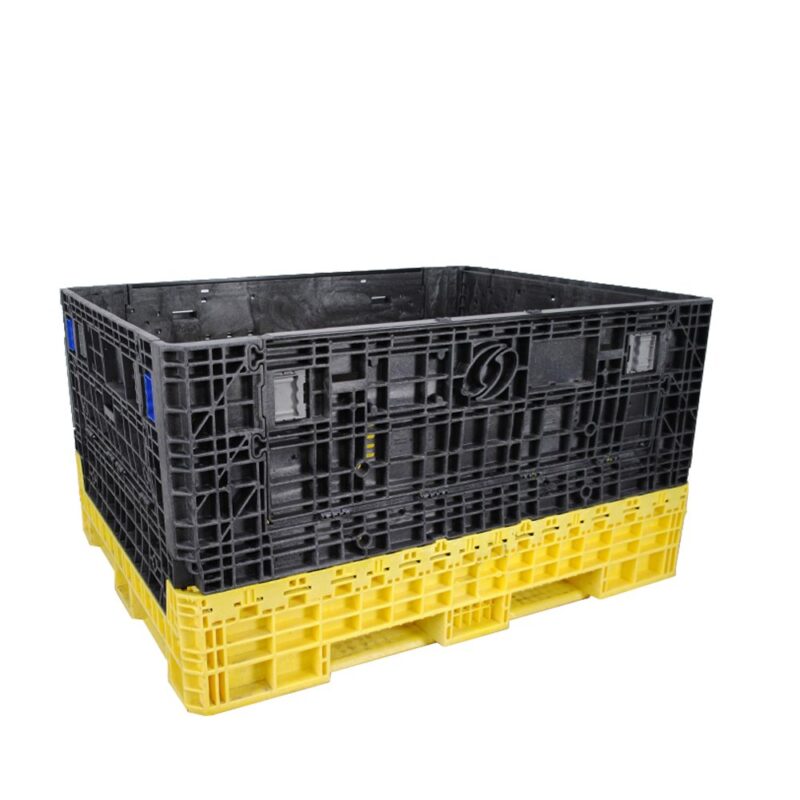
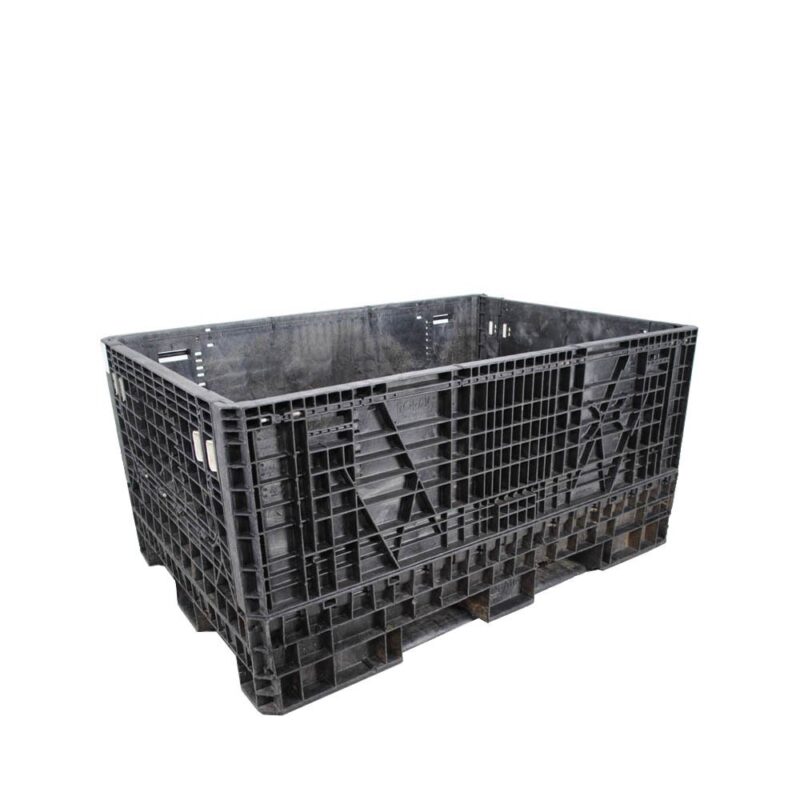
Used collapsible bulk containers are heavy-duty reusable HDPE pallet boxes that have already been in service in automotive, warehouse, and industrial programs. You are not buying a disposable tote. You are buying a structural returnable container system designed to collapse, stack, fork from four sides, and go back into service for years.
What makes used attractive is simple: the function is still there, but the capital cost is much lower. A good used container still collapses correctly, still stacks, still carries load, and still saves return freight. The tradeoff is cosmetic. Used lots are normally mixed by brand and color, and they are not cleaned to a defined standard before shipment.
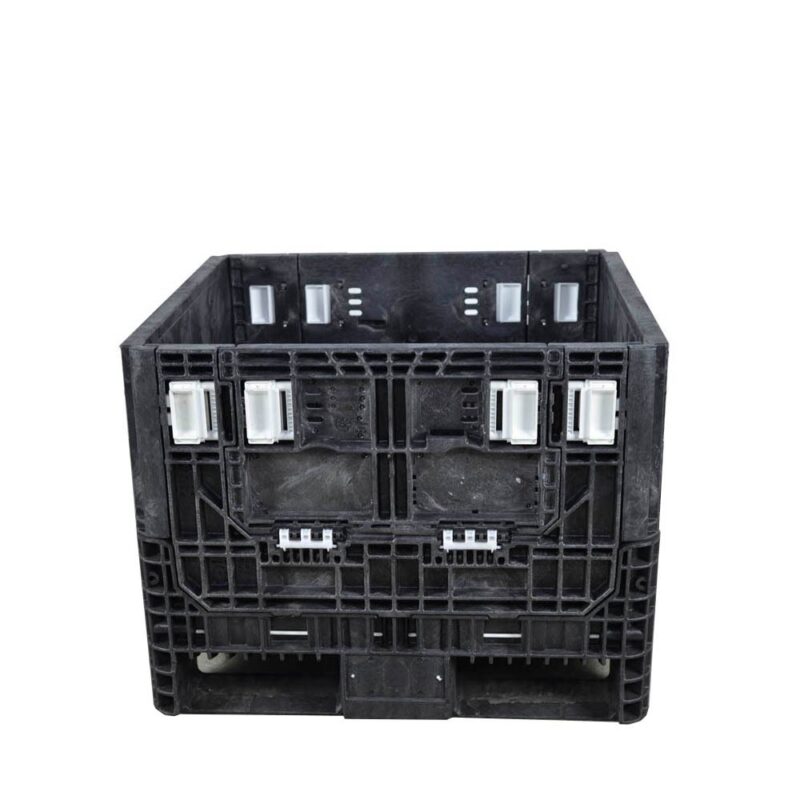
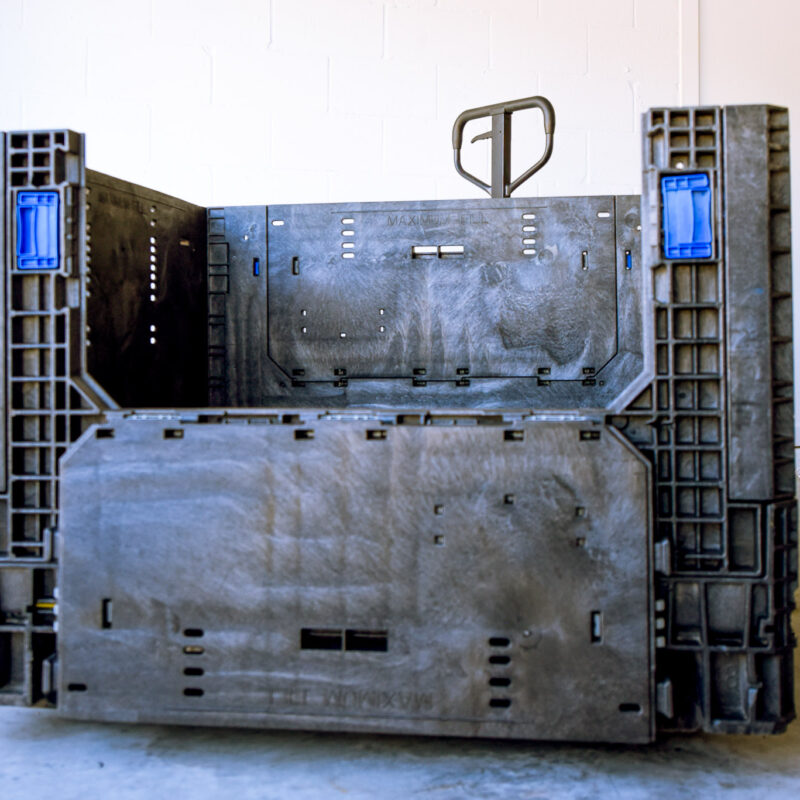
Used container photo placeholder
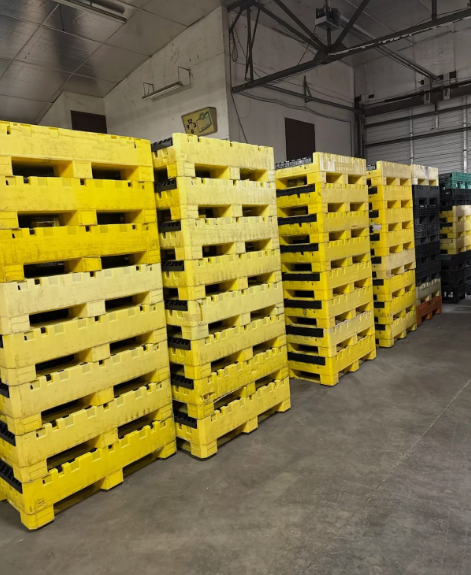
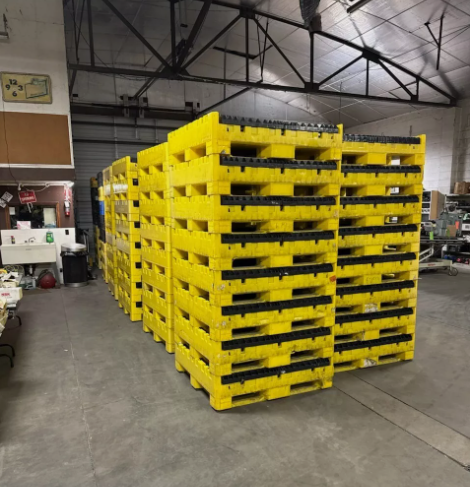
Warehouse floor · stacked and deployed containers · live industrial service
Every used container we sell is checked for function before shipment.
- Collapse mechanism — walls must fold and deploy correctly
- Wall locks — sidewalls must stay upright in service
- Drop doors — hatches and latches must open and close properly
- Base integrity — reinforced pallet base must remain structurally sound
What you get in practical terms
Lower cost per unit
Used is typically the lowest-cost condition tier. It is the fastest way to add container count without paying for a new production run.
No production lead time
New containers are often built to order. Used ships from live inventory, which is why it works well for overflow, launches, and urgent replacement demand.
Real industrial design
These are injection-molded HDPE containers with reinforced bases, field-replaceable components, four-way fork entry, and the same freight-saving collapse concept buyers want from new.
What used does and does not mean
Used does mean inspected-functional surplus, mixed lots, lower delivered cost, and fast shipment from available stock. Used does not mean cleaned to a defined standard, visually uniform, AIAG-compliant by default, or supported by manufacturer documentation.
Best fit: price-driven internal programs, export and one-way shipments, warehouse storage, overflow demand, and oversized footprints that are hard to source new at practical pricing.
02
Who Buys Used Collapsible Bulk Containers
Programs where used is the right call — and programs where it is not
Used containers are the correct answer for a specific set of programs — and those programs are extremely common. If your situation matches any of the following, used is usually your best path. If it does not match, the better answer is reconditioned or new, and it is cheaper to decide that before a PO is issued.
Used is the best fit when your program involves:
- High-volume purchasing — unit count and total delivered cost are the primary metrics; used maximizes units per dollar.
- Export and one-way use — ISPM 15 exempt, containers do not return, and lowest cost wins.
- Overflow and surge capacity — you need containers now, live inventory ships 2–5 days, no production run required.
- Warehouse and 3PL storage — internal use where cosmetic condition does not affect performance or audits.
- Work-in-process (WIP) — line-side containers that never face a customer, where function matters more than appearance.
- Oversized footprints — 65×48, 70×48, and 78×48 are most available and most affordable in used surplus.
- Agricultural and bulk material handling — raw material programs where hygiene standards do not require cleaned documented stock.
- Supplementing an existing fleet — adding capacity without paying new-production pricing when cosmetic matching is not a requirement.
Where used typically falls short: programs where containers will be seen by customers, where food safety audits require cleaned documented stock, where a regulatory body requires material traceability, or where a closed-loop automotive fleet requires every container to be the same brand, color, and specification. For those programs, reconditioned or new from Monoflo and Orbis is the correct path.
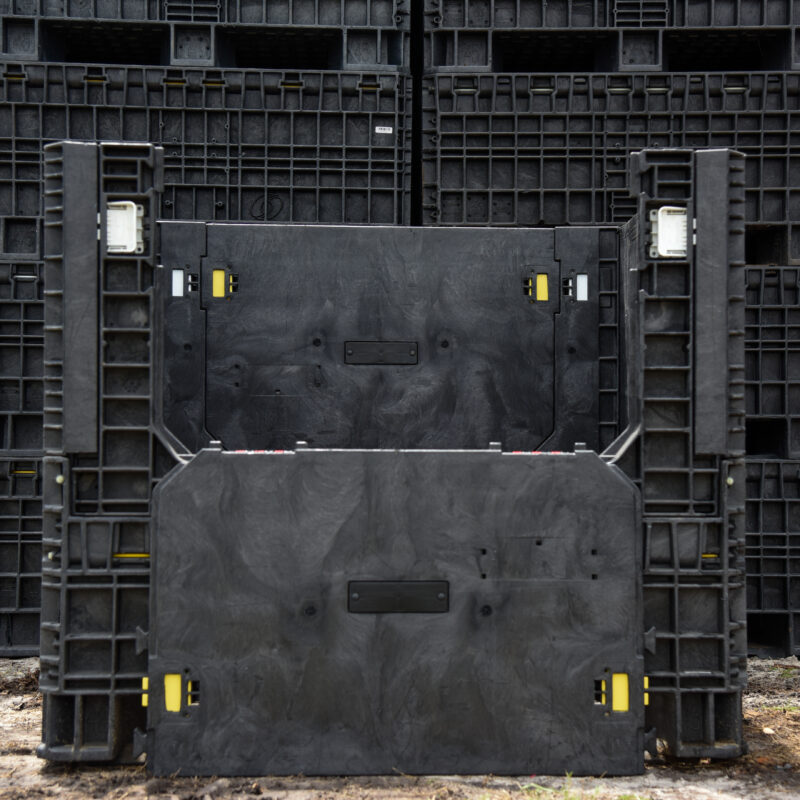
Program fit photo placeholder
Automotive or warehouse deployment example · mixed used fleet in operation
One situation that surprises first-time buyers is automotive WIP and overflow. Even Tier-1 automotive plants run used containers on WIP lines, overflow staging, and internal parts flow that never enters the AIAG customer loop. The AIAG requirement applies at the shipment point. Internal WIP is a cost-optimization decision, and used is common there.
03
Used Collapsible Bulk Container Sizes, Footprints & Backhaul Economics
All 8 standard footprints with typical heights, collapsed heights, and trailer counts
Used inventory covers all 8 standard collapsible bulk container footprints. Three of the eight — 65×48, 70×48, and 78×48 — are effectively sourced through used surplus at practical pricing. New production of these oversized footprints is rare and expensive; manufacturers focus capacity on 48×40 and 48×45 where demand is broader. If you need large footprints, used surplus is usually where the real inventory lives.
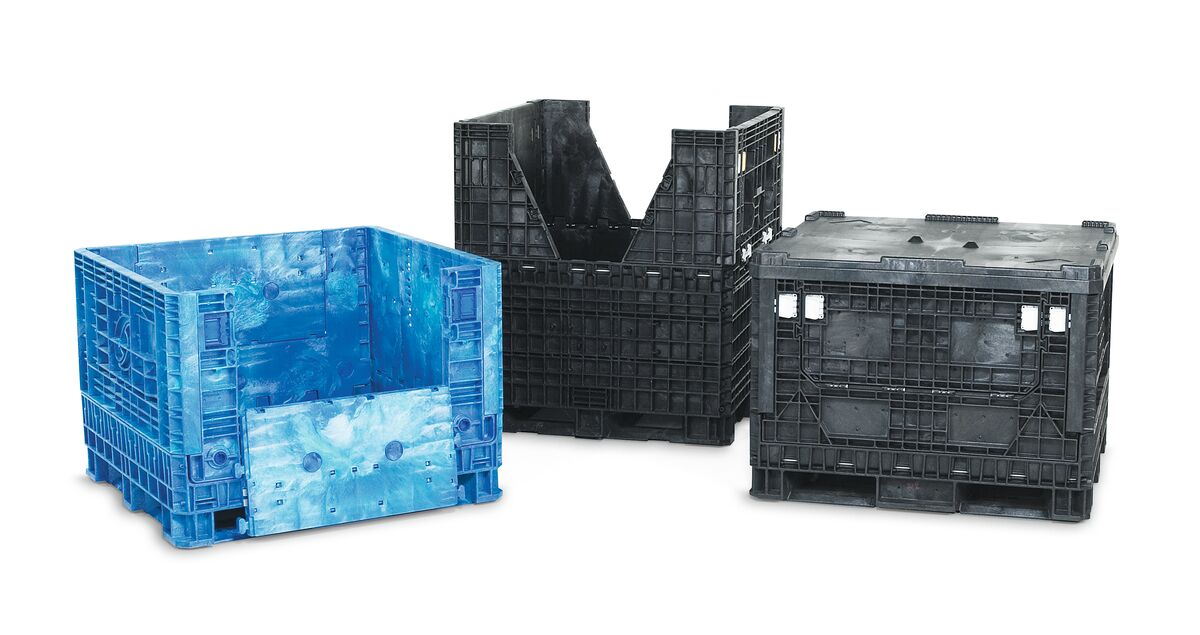
32×30 — Heights: 25″ 30″ 34″
48×40 — Heights: 25″ 34″ 39″ 46″
48×45 — Heights: 25″ 34″ 42″ 48″ 50″
56×48 — Heights: 25″ 34″ 42″
62×48 — Heights: 25″ 34″ 50″
65×48 — Heights: 25″ 34″ 42″ 50″
70×48 — Heights: 25″ 34″ 50″
78×48 — Heights: 25″ 34″
| Footprint | Typical Heights | Collapsed Ht. | Erected / 53-ft Trailer | Collapsed / 53-ft Trailer | Return Ratio |
|---|---|---|---|---|---|
| 32×30 | 25″, 30″, 34″ | 12.6″ | 180–240 | 540 | ~3:1 |
| 48×40 | 25″, 34″, 39″, 46″ | 13.6″ | 90 | 240 | ~3:1 |
| 48×45 | 25″, 34″, 42″, 48″, 50″ | 12.5–28.5″ | 56–112 | 252 | 3–5:1 |
| 56×48 | 25″, 34″, 42″ | ~13–21″ | 60–72 | 200 | ~3:1 |
| 62×48 | 25″, 34″, 50″ | ~13–21″ | 48–60 | 180 | ~3:1 |
| 65×48 | 25″, 34″, 42″, 50″ | ~13–21″ | 44–56 | 160 | ~3:1 |
| 70×48 | 25″, 34″, 50″ | ~13–21″ | 36–48 | 140 | ~3:1 |
| 78×48 | 25″, 34″ | ~14–22″ | 32–40 | 112 | ~3:1 |
Why the Collapse Ratio Matters
The core ROI driver for collapsible containers — new or used — is return freight. A 48×45×34 collapsed stands about 12.5 inches tall; erected it is 34 inches. A 53-foot trailer fits roughly 84 erected containers or 252 collapsed — a 3:1 ratio for the most common size. For programs running regular returns, those freight savings compound quickly and are one of the main reasons collapsible packaging pays for itself.
Inventory changes daily. Call 855-662-9085 or submit a quote request for current live counts on any footprint before placing a PO.
04
How to Buy Used Collapsible Bulk Containers — What to Tell Us
Five pieces of information that get you an accurate same-day quote with freight included
Getting a quote takes about two minutes. The more specific you are, the faster and more accurate the response — and the less back-and-forth it takes to confirm availability. Here is exactly what we need to price your order same day:
1
FootprintLength × width in inches — e.g. 48×45, 32×30, or 65×48. If you are unsure, describe what you are storing or transporting and we will recommend the right size.
2
HeightStanding height in inches. Common options are 25″, 30″, 34″, 42″, and 50″. If you need drop doors or compatible lids, note that here.
3
QuantityHow many units you need. Used containers are most economical at truckload quantities — roughly ½ truckload minimum in many lanes. Smaller orders may be better served by reconditioned stock.
4
Delivery ZIP codeEvery quote includes freight to your dock from the nearest shipping point. ZIP code is required for an accurate delivered number.
5
Any hard requirementsColor preferences, brand requirements, drop door configuration, lids, timing constraints, or anything else non-negotiable. Used lots are mixed by default, so hard requirements should be flagged up front.
Once we have those five items, we respond same day, 7 days a week with live counts, pricing, freight to your ZIP, and delivered total. We also buy surplus used collapsible bulk containers — if you have inventory to liquidate, use the same form and select Sell containers.
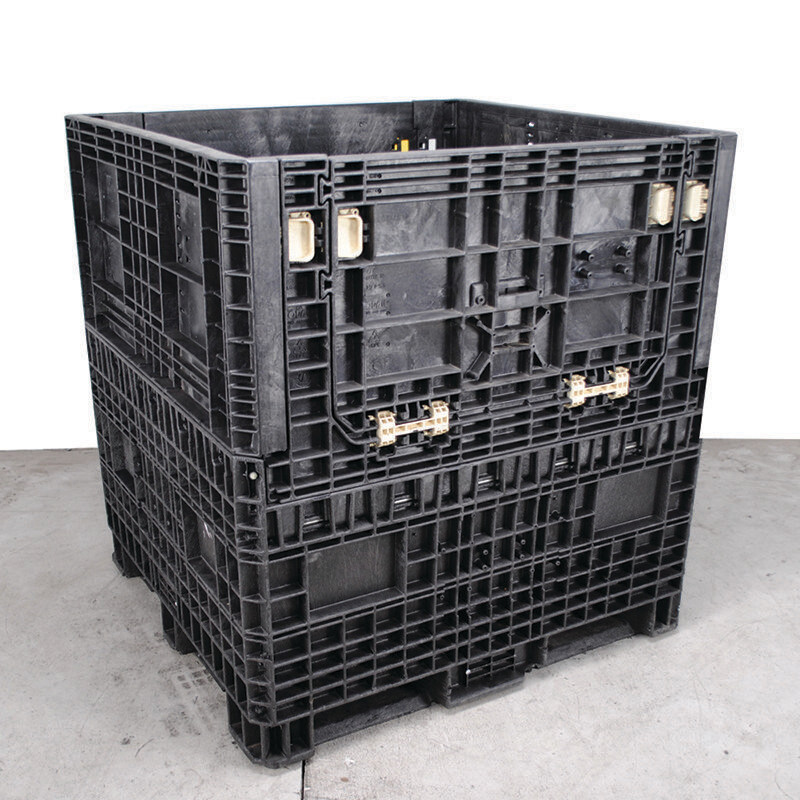
Delivery photo placeholder
Forklift unloading or dockside shipment · used containers arriving at your facility
Submit a Quote Request →
or call 855-662-9085
7 days, 7am$29pm ET · Same-day response · Freight always included
05
Industry & Application Fit Guide
How used collapsible bulk containers fit across industries — and where they do not
| Industry / Application | Used Container Fit | Rating |
|---|---|---|
| Warehouse & 3PL Storage | Standard choice. Cosmetic variation is accepted in most warehouse environments and used gives the best delivered cost. | Best Fit |
| Export & One-Way Programs | Excellent fit. ISPM 15 exempt, no return loop, and low unit cost usually makes used the economic winner. | Best Fit |
| Work-In-Process (WIP) | Ideal for internal factory use where nobody is evaluating container color and function is the main requirement. | Best Fit |
| Industrial Manufacturing | Strong fit for parts storage, kitting, line-side staging, and internal distribution where mixed-brand surplus is acceptable. | Best Fit |
| Agricultural & Bulk Material | Strong fit for raw material handling where audit-grade cleaning documentation is not required. | Best Fit |
| Overflow & Surge Capacity | Often the fastest path to additional containers because stock ships from live inventory instead of production. | Best Fit |
| Automotive WIP & Overflow | Common for non-AIAG portions of automotive programs. Internal WIP and overflow are very different from customer-facing closed-loop requirements. | Situational |
| Food & Beverage | Can work in limited non-regulated programs, but reconditioned is the safer choice where cleaning documentation matters. | Situational |
| Fleet Expansion with Appearance Matching | Possible, but if color or brand consistency matters, reconditioned usually gives a better visual result than used. | Situational |
| AIAG Closed-Loop Automotive | Usually not appropriate. Spec consistency and customer requirements typically push these programs toward new production. | Not Ideal |
| Pharmaceutical & Medical | Not appropriate. Material traceability, documentation, and regulatory compliance usually require new production. | Not Ideal |
06
Used Collapsible Bulk Container Buying Guide & Terminology
What to know before sourcing used HDPE pallet boxes — and what the different names mean
Used collapsible bulk containers also appear in the market as used collapsible pallet containers, collapsible pallet boxes, knock-down bins, collapsible bulk bins, HDPE pallet boxes, and, for the 32×30 footprint, used Gaylord containers. The names vary by industry. The product category is the same.
When you buy used, you are buying from surplus — decommissioned fleet programs, plant changeovers, or warehouse liquidations. The real supplier differences are not the label on the quote. They are whether the inspection guarantee is clear, whether freight is included, and whether the supplier has the footprint and quantity you need in live inventory today.
| Term | What It Means | Same Product? |
|---|---|---|
| Used Collapsible Bulk Container | Standard industry term for an HDPE collapsible pallet container in used condition | Yes — primary term |
| Used Collapsible Pallet Container | Same product with emphasis on pallet-base handling and returnable use | Yes |
| Used Knock-Down Bin | Common term in warehouse, distribution, and 3PL environments | Yes |
| Used Collapsible Pallet Box | Common in automotive and industrial programs | Yes |
| Used Collapsible Bulk Bin | Common in agricultural and bulk material handling | Yes |
| Used HDPE Pallet Box | Material-specific variation of the same product category | Yes |
| Used Gaylord Container | Usually refers to the 32×30 footprint specifically | Subset — 32×30 only |
| Refurbished / Reconditioned | Usually indicates a cleaned, inspected, and repaired condition tier | Related, but different tier |
Key Sourcing Criteria — What Separates a Good Supplier from a Bad One
Before placing a PO on used collapsible bulk containers, confirm:
- Inspection guarantee is specific — collapse mechanism, wall locks, drop doors, and base integrity should all be part of the check.
- Live counts are confirmed before commitment — used stock changes daily and yesterday’s availability does not guarantee today’s.
- Freight-included delivered pricing is clear — these are bulky industrial items and delivered cost is the only number that matters.
- Height consistency is understood — some used lots can contain mixed heights within the same footprint.
- Brand-mix expectations are set — used lots are typically Buckhorn, Orbis, and others mixed together unless otherwise specified.
What to Check When Your Used Containers Arrive
On delivery, confirm each used collapsible bulk container before putting it into service:
1
Collapse and deploy the wallsEach wall should lock upright firmly with no play. If a wall does not lock or collapses under light pressure, flag it before it enters service loaded.
2
Operate each drop doorOpen and close both hatches. Latches should engage cleanly. A sticky latch is often a bent pin and is usually field-replaceable.
3
Inspect the baseFlip one unit and check the I-beam runners. Cracked welds or missing runner sections affect load distribution and should be documented before use.
4
Check the top stacking railsLook for deformation or corner cracking. Damaged stacking rails affect how containers sit when stacked, especially in 4-high and higher applications.
5
Note any brand or footprint anomaliesConfirm the footprint matches what you ordered. Mixed footprints are uncommon but possible and any mismatch should be flagged immediately.
Any functional issue found on delivery should be documented and reported immediately. Our inspection guarantee covers functional defects, not cosmetic variation. If a collapse mechanism fails or a base is cracked on delivery, that is a claim. A scuff or mixed color is not.
07
Frequently Asked Questions
Common questions from buyers purchasing used collapsible bulk containers for the first time
Are used collapsible bulk containers inspected before sale?
Yes. Every unit we sell is inspected and guaranteed functional on delivery. The collapse mechanism, wall locks, drop doors, and base are all confirmed before shipment. Cosmetic variation — mixed colors, brands, scuffs, and fading — is normal on surplus inventory and is not a functional defect.
What brands come in a used lot?
Buckhorn, Orbis, and other major HDPE manufacturers are typical, often mixed within a single shipment. Color matching and single-brand consistency are not guaranteed on used lots. If those are hard requirements, reconditioned or new stock is usually the better path.
What is the load capacity of used collapsible bulk containers?
Many models are rated up to 2,000 lb, depending on footprint, height, and manufacturer. Exact load rating varies by model, so tell us the size you need and we will quote from current stock accordingly.
Why are oversized footprints mainly available in used condition?
Footprints like 65×48, 70×48, and 78×48 were deployed at scale in large automotive and industrial programs over the past two decades. Those programs are the source of today’s used surplus. New production of these sizes is limited, so used surplus is usually the most cost-effective and most available path.
What is the minimum order for used containers?
Minimum order varies by footprint and current inventory, but used orders are usually most economical around half a truckload. Contact us with your footprint, quantity, and destination ZIP for live counts and delivered pricing. If your quantity is smaller, ask about reconditioned stock.
Are used collapsible bulk containers ISPM 15 exempt?
Yes. All HDPE collapsible pallet containers are ISPM 15 exempt regardless of condition, so they do not require heat treatment or fumigation for export use.
How quickly do used containers ship?
Used containers ship from live inventory rather than production. Transit is usually 2–5 business days after order confirmation, depending on your delivery ZIP and the nearest shipping point.
What is the difference between used and reconditioned?
Used is inspected-functional surplus with cosmetic variation and no defined cleaning standard. Reconditioned goes through a defined cleaning and inspection process, usually ships 1–3 business days, and is a better fit when appearance or deployment-ready cleanliness matters.
What is a Gaylord container and is it the same as a collapsible bulk container?
A used Gaylord container usually refers to the 32×30 footprint specifically. It is part of the broader used collapsible bulk container category. All 32×30 Gaylords are collapsible bulk containers, but not all collapsible bulk containers are 32×30 Gaylords.
Do you buy used collapsible bulk containers?
Yes — we buy and sell. If you have surplus used containers to liquidate — full decommissioned fleet, partial lots, or a single footprint — call 855-662-9085 or use the form below and select Sell containers. We respond same day and provide offered pricing with no obligation.
Can lids or dividers be added to used containers?
Yes. Lids are available and matched by footprint. Divider systems are also available — corrugated, foam, and specialty dunnage. Confirm your footprint before ordering accessories. See our container lids page for options by size.
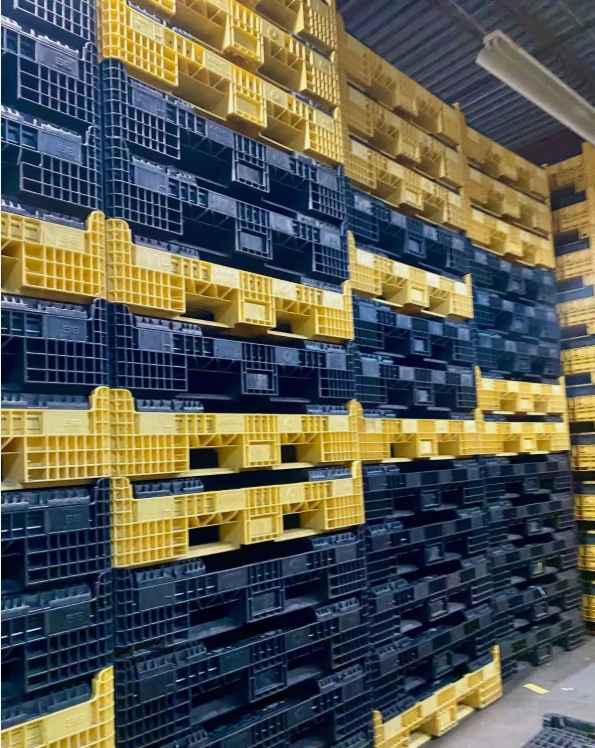
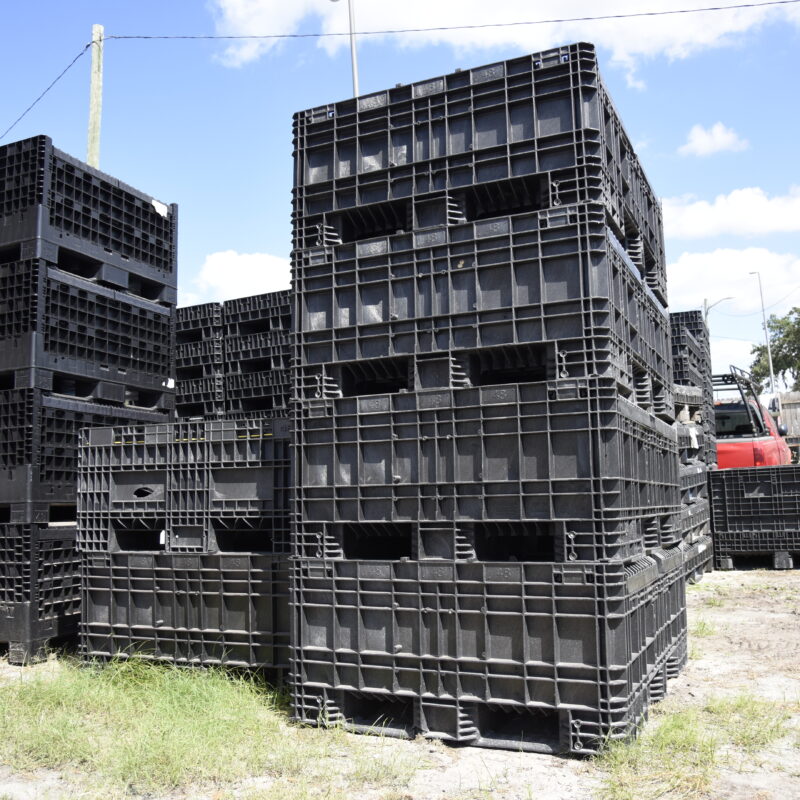
Collapsed stack placeholder
Collapsed used containers stacked for return freight and storage density