Reviewed by Ryan Penick, Operator, Wholesale Industry LLC · Updated October 2026
Shopping for collapsible bulk containers by application is the fastest way to land on the right footprint, height and condition. Start with what goes inside, how it moves and whether the container comes back empty, then use the guides below to narrow industrial bulk container uses down to a short list you can quote.
Why choose collapsible bulk containers by application
Two buyers can order the same 48×45 container and have completely different experiences. One runs it between a stamping plant and an assembly line every week; the other parks it on a warehouse floor for a season. The container is identical, but the questions that matter are not. Shopping by application puts those questions first: what the load weighs, how the container is picked up, how high it stacks, whether it travels, and what happens to it when it is empty.
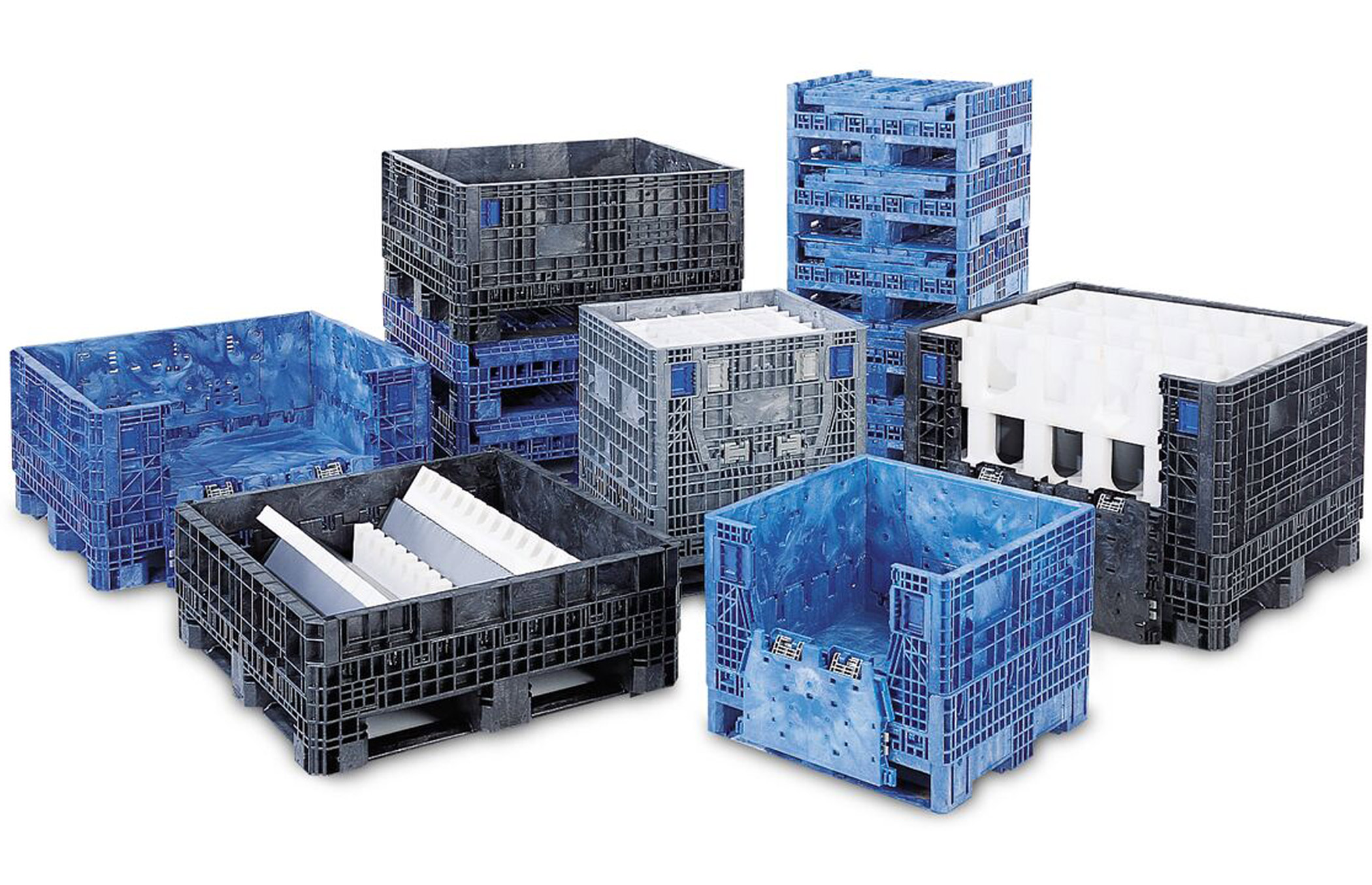
Collapsible bulk containers (also called collapsible pallet containers, collapsible pallet boxes, foldable bulk containers or collapsible bulk bins) typically combine an integrated pallet base with 4-way forklift entry, plastic walls that fold flat when empty, and drop doors for access. Those features pay off differently in each use, so pick the application below that matches your operation.
Industrial bulk container uses at a glance
The table below is a starting point, not a rule. Footprints are nominal and heights vary by model, so confirm the exact unit on your quote.
| Application | Footprints buyers usually start with | Height range to consider | Features that matter most | Condition that often fits |
|---|
| Automotive / manufacturing parts | 48×45, 48×40, 56×48 | Low to mid (about 25–40 in) for reach-in picking | Drop doors, dividers or dunnage, consistent size across the fleet | New for matched programs; reconditioned for expansion |
| Warehouse floor storage | 48×40, 48×45 | Mid to tall (about 34–50 in) to use vertical space | Stackability when loaded, lids, forklift entry | Reconditioned or used |
| Distribution / cross-dock | 48×40 | Mid (about 34–45 in) | Pallet-compatible footprint, trailer fit, labeling area | Reconditioned or used |
| Returnable shipping loops | 48×45, 48×40 | Matched to load and trailer height | Folded return cube, lids, durability | New or reconditioned |
| Bulky or long components | 56×48, 62×48, 65×48, 70×48, 78×48 | Varies by part length | Large footprint, door on the long side | Depends on availability |
| Small parts, tight aisles | 32×30 | Low (about 25–34 in) | Compact footprint, easy reach | Any |
A five-question checklist before you request a quote
- What goes inside, and how heavy is a full container? Weight decides whether a model's rated capacity works, especially for stacked loads. Check the rated capacity for the exact model rather than assuming one footprint behaves like another.
- How is it picked up? Forklift, pallet jack, or both. Most collapsible containers typically have 4-way forklift entry, but base design (runners vs. feet) affects pallet jack use and conveyor travel.
- How high does it stack, and where? Measure clear height in your building, in racking openings and in the trailers you use. Stacking loaded containers is only safe within the model's rated capacity and on a level floor.
- Does it travel? If containers ship out and come back, the folded height and how many fit on a return trailer matter as much as the assembled size.
- Does it have to match an existing fleet? Mixing heights or brands in one loop causes stacking and handling problems. If you are adding to a program, send the brand, model and dimensions of what you already run.
Choosing a footprint for your use
Footprint is the decision that is hardest to undo, because it must fit your floor layout, racking, trailers and existing pallets.
- 48×45 collapsible bulk containers are the common automotive and industrial standard. If your parts program or customer specifies a size, it is often this one.
- 48×40 collapsible bulk containers match the standard GMA pallet footprint, which makes them the natural choice for distribution, racking built for 48×40 pallets and mixed loads alongside palletized freight.
- Larger footprints such as 56×48 and up to 78×48 suit long or bulky parts that will not lie flat in a standard box.
- 32×30 containers fit small parts, light loads and tight work cells.
Not sure? Shop by footprint to compare every nominal size side by side.
New, reconditioned or used: matching condition to application
Condition is a cost and consistency decision. Each application tends to lean one way:
- New containers are factory orders from brands such as Monoflo and ORBIS (Buckhorn is also listed). They make sense when a program needs identical units, a specific model, or a long service life from day one. Minimums are typically higher for new orders. See new collapsible bulk containers.
- Reconditioned containers have been inspected, cleaned and repaired. They are a strong fit for warehouse storage, expanding an existing returnable loop, or any use where appearance and dependable doors matter but brand-new units do not. See reconditioned collapsible bulk containers.
- Used containers are sold as returned from service, in mixed brands. They work well for internal storage, one-way projects and budget-driven builds where cosmetic wear is acceptable. See used collapsible bulk containers.
Minimums vary by condition and model. Reconditioned and used containers ship from our yards, so smaller quantities are usually easier to arrange than with factory orders.
Common mistakes when buying by use
- Choosing by price per unit alone. A cheaper container that does not stack in your building or fit your trailer costs more in floor space and freight.
- Ignoring the empty trip. For anything that ships and returns, folded height determines return freight. Ask how many folded units fit on a pallet stack or trailer.
- Mixing heights in one stack. Containers of different heights or brands may not nest or interlock when stacked. Keep stacks uniform.
- Assuming load capacity. Two containers with the same footprint can carry very different loads. Check the rated capacity for the exact model before stacking full units.
- Forgetting access. If operators reach into the container, a drop door on the right side saves time and backs. Specify which side needs the door.
- Skipping lids and dividers. Dust, rain at the dock and parts damage are cheaper to prevent than to fix. Ask about lids and dividers with your quote.
Handling and storage tips for any application
- Fold and unfold on a level surface, following the wall sequence for that model; forcing walls out of order is the most common cause of latch damage.
- Close and latch drop doors before lifting or stacking.
- Store folded containers in uniform stacks by model so they are easy to count and pull.
- Keep forks fully inserted and level when lifting a loaded container, and avoid dragging bases across concrete.
- Inspect latches, hinges and door pins on a set schedule, and pull damaged units out of stacks until repaired.
- When containers reach the end of their use in your operation, you can sell used collapsible bulk containers back rather than scrap them.
Pickup and freight
Reconditioned and used containers ship from our yards in Pennsville, New Jersey and Tampa, Florida, and pickup can be arranged at either yard. Smaller orders move by LTL freight quoted to your ZIP code; full truckloads are quoted individually. Availability and price are confirmed with your quote, and product photos may be representative.
How to order collapsible bulk containers for your application
Send us the application, preferred footprint and height, condition (new, reconditioned or used), quantity, what the container will hold, whether you need lids or dividers, and your delivery ZIP code. If you are matching an existing fleet, include the brand and model. Request a quote online or call 855-662-9085, and we will confirm availability, freight and the exact containers offered.
Frequently asked questions
What are collapsible bulk containers used for?
They are used to move and store parts, components and goods in bulk. Common uses include line-side delivery in manufacturing, automotive parts programs, warehouse floor storage, distribution and cross-dock consolidation, and returnable shipping loops where the container folds flat for the empty trip back.
Which footprint is most common?
The 48×45 and 48×40 footprints are the most common. 48×45 is the common automotive and industrial standard, while 48×40 matches the standard GMA pallet footprint used across distribution and racking. Larger footprints such as 56×48 through 78×48 suit long or bulky parts, and 32×30 suits small parts.
How do I choose the right height?
Start with the load: heavy, dense parts usually suit lower containers, while light, bulky goods suit taller ones. Then check clear height in your building, racking openings and trailers. Heights typically range from about 25 to 50 inches depending on footprint, so confirm the exact model on your quote.
Can I stack loaded collapsible containers?
Many models are stackable when loaded, but only within the rated capacity for that exact model and on a level surface with doors closed and latched. Do not mix brands or heights in a loaded stack unless they are designed to interlock. Check the rated capacity for the exact model before stacking.
Should I buy new, reconditioned or used for my application?
New suits programs that need identical units or a specific model, though minimums are typically higher. Reconditioned units are inspected, cleaned and repaired, and fit storage and loop expansion well. Used units are sold as returned from service in mixed brands and suit internal storage or budget-driven projects.
Do plastic collapsible containers need ISPM 15 treatment for export?
Plastic containers are not wood packaging, so ISPM 15 wood-treatment rules do not apply to the container itself. Requirements for your specific shipment can still vary, so confirm them with your freight forwarder or the destination before shipping.
Can I buy a small quantity?
Minimums vary by condition and model. Reconditioned and used containers ship from our yards, which usually makes smaller orders easier to arrange. New containers are factory orders and typically carry a higher minimum. Tell us your quantity and we will confirm what is possible.
Do you buy used collapsible bulk containers?
Yes. If you have collapsible containers you no longer need, use the sell page to tell us the brand, footprint, height, condition, quantity and location, and we will review them.