Start with what the container has to match
If your product already moves on 48×40 pallets, through 40-in-deep racking or into mixed-pallet trailers, choose 48×40 and nothing else changes. If a customer or program specifies the automotive footprint, or your existing fleet is 48×45, stay with 48×45 so dunnage, dividers and rack positions keep working.
Trailer and floor space
Both footprints load two across a standard trailer, so the floor count per trailer is similar. The difference shows up in racking and on the floor: 48×45 takes about 12% more area per container, which matters in a crowded line-side layout, and less in a yard.
Height matters more than you expect
Within each footprint the height sets capacity and stacking. Low 25-in units are the easiest to fill and empty by hand and stack highest when collapsed; 34-in is the all-round height; 45-in and up carry the most volume per footprint but need a forklift for every move. Compare the height options on each footprint page.
Availability and price
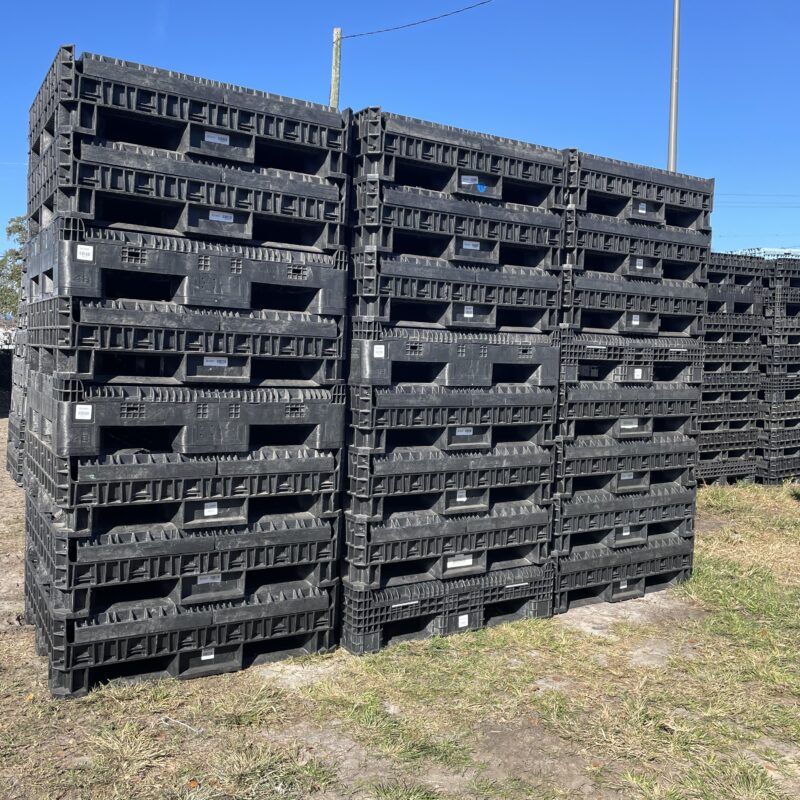
Used and reconditioned 48×45 containers are usually the easiest to find in quantity because they come out of automotive loops. 48×40 used stock is strong in the 25-in and 45-in heights. Live counts and prices for both are below; new Orbis and Monoflo containers are available in either footprint as factory orders.
Dividers, drop doors and lids
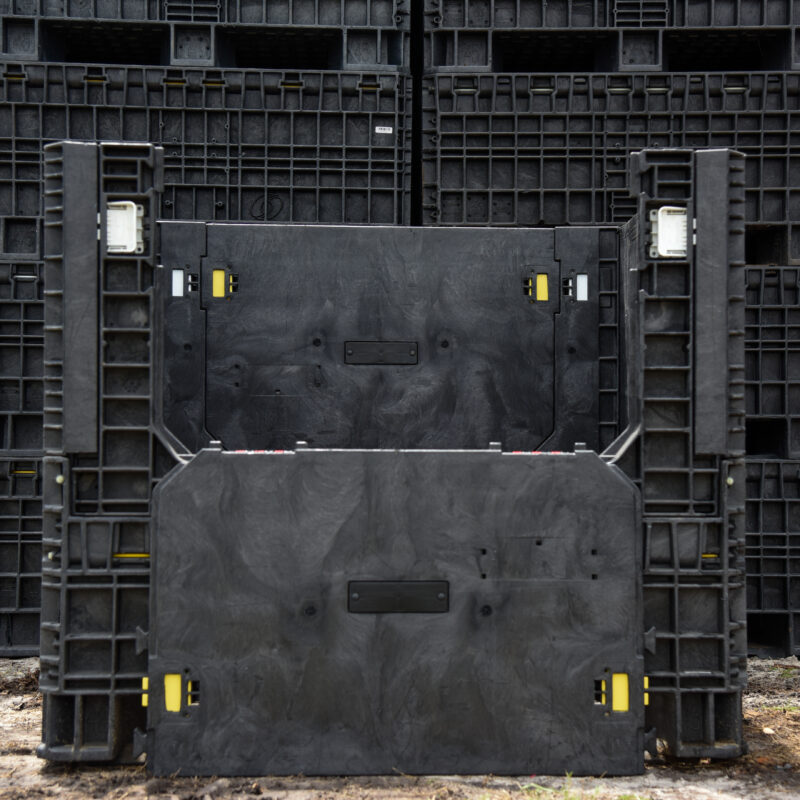
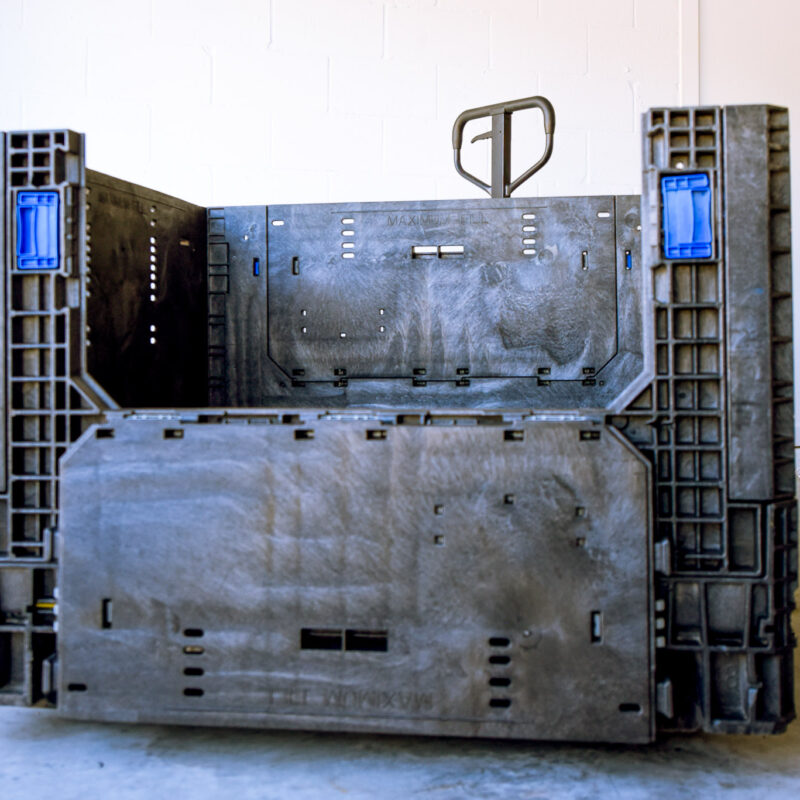
Both footprints take drop doors, lids and divider sets. Divider inserts are footprint- and height-specific, so order containers and dividers together and keep one footprint per program where you can.
Mixing footprints
Avoid it inside one loop. A 48×45 container on a 48×40 pallet position overhangs by five inches and can jam a conveyor or rack entry. Mixed fleets work fine when each footprint has its own lanes.